Edition 2022
Sections

IL CINEMA RITROVATO KIDS & YOUNG

Il Cinema Ritrovato Kids is aimed at a public of boys and girls with a rich offering of screenings, labs, meetings and theatrical shows. In this edition, the main focus will be on comic cinema and, above all, gags: from cinema’s origins to Chaplin’s first appearance and from Buster Keaton to the animated shorts of the Czech series Pat & Mat. It will also be an opportunity to remember the great film scholar and historian Giannalberto Bendazzi, who died last December. And more: the best of the Animateka festival in Lubiana, an homage to the silhouette cinema of Lotte Reiniger, and a special date with the most famous voyage to the moon in the history of cinema. In February, a group of youngsters between 14 and 18 years of age began a journey into the complex and fascinating world of film programming and cinematic communication. For the festival we will present a showcase of the titles they have selected from the festival programme around which they will produce video clips and film reviews and conduct interviews with guests and the public.

IL CINEMA RITROVATO KIDS & YOUNG

SUPER8, 9.5MM & 16 MM – GREAT SMALL GAUGES

In this year’s edition we focus on one hand on the collection of the University of Paderborn dedicated to small gauge films by female experimental filmmakers from the German-speaking countries made between 1964 and the 2000s, including directors like Ute Aurand, Elfi Mikesch, Christine Noll Brinckmann and many more. On the other hand, we will celebrate the anniversary of the 9.5mm format which came on the market in the year 1922, with some restorations from the collections of Home Movies, INEDITS, Fondation Jérôme Seydoux-Pathé and vintage prints from Lichtspiel / Kinemathek Bern, to be projected with a vintage 9.5mm projector. Again, the machines will be as wondrous as the films.
Curated by Mariann Lewinsky and Karl Wratschko

SUPER8, 9.5MM & 16 MM – GREAT SMALL GAUGES

PETER WEISS – POETRY IN MOTION

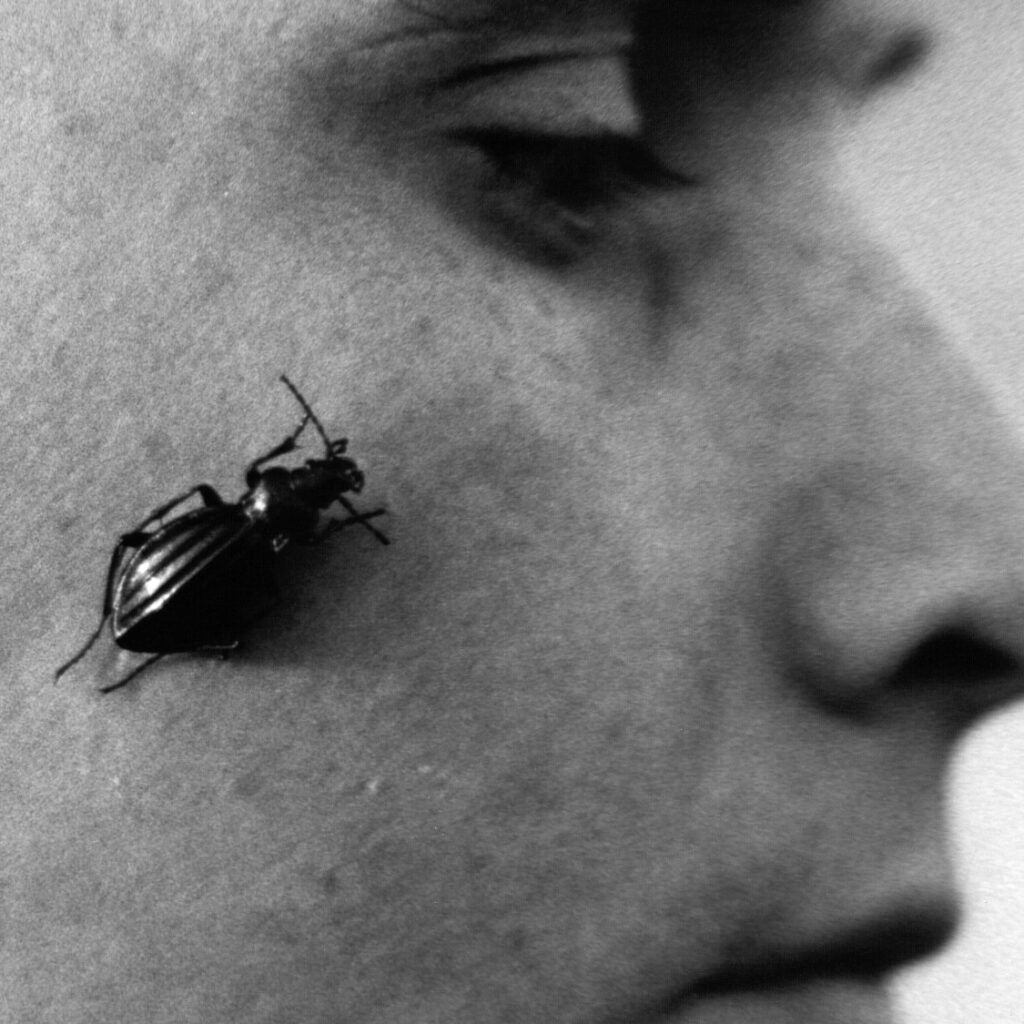
German-born painter, poet, novelist, playwright and filmmaker, Peter Weiss (1916-82) was a pioneering figure in the Swedish art and experimental film scene in the 1950s. His experimental shorts bulge with visual poetry in their rendering of the body and the human condition, while his remarkable documentary shorts give stunning testimony to Weiss’ eye for detail and ability to find human dignity even in the most difficult circumstances. Films from both categories are featured in this programme, however, the centerpiece is Weiss’ feature-length Hägringen (1959), an extraordinary and very personal take on ‘city symphony’ about a young man’s 24-hour encounter with Stockholm and with society at large. The films, from the collection of Swedish Film Institute, will be presented in vintage prints and DCPs of recent digital restorations.
Curated by Jon Wengström

PETER WEISS – POETRY IN MOTION

FOREVER SOPHIA

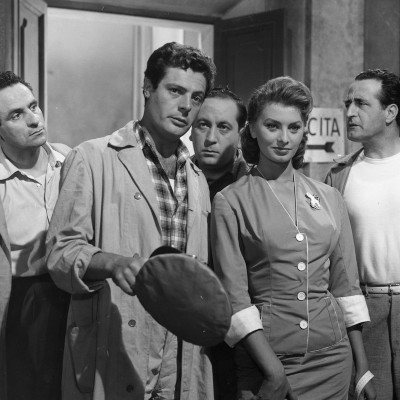
A symbol of a country’s rebirth from the postwar period to the 1960s, going from national beauty queen to international glamour idol, Sophia Loren is one of the most recognisable Italian icons in the world. Yet, beyond glamour, her filmography reveals hidden treasures, forgotten gems and nuanced roles. Her multifaceted acting career took different trajectories: from melodrama, to pink neorealism – her bursting personality flanked by Marcello Mastroianni – to her revelation as a dramatic actress in Two Women and her crowning achievement in A Special Day. Plus in Hollywood she worked with luminaries such as George Cukor, Stanley Donen and, of course, Charles Chaplin. There are more roles in Italian films to be rediscovered by audiences all over the world as now, more than ever, Sophia Loren’s characters need to be seen and enjoyed on big screen.
Curated by Emiliano Morreale

FOREVER SOPHIA

“TELL THE TRUTH!” - A VIEW INTO YUGOSLAV CINEMA

Established in 1918 as the Kingdom of Serbs, Croats and Slovenes, Yugoslavia constituted one of the most socio-politically, culturally, religiously, and ethnically diverse states in modern Europe. The 1950s and the 1960s saw the birth of formidable new artists and aesthetic innovations charged along diametrically different planes, supported by a sophisticated national studio system. Artists faced pertinent issues challenging contemporary Yugoslav reality, breaking taboos and forging new means of cinematic expression. This programme, featuring some fantastic new restorations along with archive prints, takes us from the classical post-war cinema to the New Wave and celebrates the works of master filmmakers of the era. What emerges are films which carry a power to speak the truth – awakening the mind and quickening the soul – in ways that can be said only for major chapters in the history of world cinema.
Curated by Mina Radović

“TELL THE TRUTH!” – A VIEW INTO YUGOSLAV CINEMA

DOCUMENTS AND DOCUMENTARIES

Films about cinema, recent and classic documentaries brought back to life on the big screen in restored versions. These include Martin Scorsese’s rockumentary masterpiece The Last Waltz; the unsettling Obedience, a filmed report on the most famous social psychology experiment in history; and two medium-length films which, in differing ways, frame the evolution of Fascism in Italy. And then there are the great portraits, such as the overwhelming love letters dedicated to iconic stars like Maurice Chevalier, Yves Montand and the ‘Brazilian Bardot’ Leila Diniz, or those covering the world of great masters like Luis Buñuel and Jacques Tati. Talking of masters, do not miss À vendredi, Robinson, an intense reflection on creativity, history and the present and future of cinema in the form of a dialogue between two white-haired authorities: Godard and Golestan.
Curated by Gian Luca Farinelli

DOCUMENTS AND DOCUMENTARIES

THE DRIFTER’S ESCAPE: HUGO FREGONESE

As swiftly as some directors changed studios, Hugo Fregonese (1908-87) changed countries. The perfect ‘saddle tramp’ figure, he drifted and made films about drifting and escape. A master of brisk and unsentimental westerns and crime thrillers, with a career spanning over four decades and numerous bases of production – from his home country Argentina, to America, Spain, Italy, the UK and West Germany – Fregonese’s cinema is unjustly underappreciated to the point of obscurity. This is a step in the direction of claiming him as an important figure; one whose cinema of impassioned subjectivity blends the aesthetic of low-budget films with fatalism, myth and raw violence. Fregonese’s name is often associated with the ten films he made during his five-year residency in Hollywood in the 1950s. This programme picks some of the finest from that period to screen alongside films made elsewhere. Forming one of the most coherent cinematic oeuvres that one could expect from a wandering director, this will be one of the major revelations of Il Cinema Ritrovato 2022.
Curated by Dave Kehr and Ehsan Khoshbakht

THE DRIFTER’S ESCAPE: HUGO FREGONESE

THE POISONED FLOWERS OF VICTORIN-HIPPOLYTE JASSET

Tribute to a man who has directed over 160 films in under five years and deserves undying fame for having introduced pulp crime fiction to cinema. After a career as costume designer and director of theatrical mass spectacles, Victorin-Hippolyte Jasset (1862- 1913) created the first ever crime and spy series featuring the detective Nick Carter, the cruel Genius of Evil Zigomar and intrepid Protéa the spy-catcher, while the title of some of his lost films are equally intriguing and unashamedly pulp: Meskal the Smuggler, Docteur Phantom and The Vulture of Syria. In 1910 he went to Tunisia, and the (partly lost) films he directed there together with Georges Hatot are well-documented by a wealth of stills recently rediscovered in the archives of the still photographer Albert Samama Chikli.
Curated by Émilie Cauquy, Hiroshi Komatsu and Mariann Lewinsky

THE POISONED FLOWERS OF VICTORIN-HIPPOLYTE JASSET

CINEMALIBERO 2022

“The history of cinema is a strange and largely unexplored land,” wrote Peter von Bagh about Eight Deadly Shots, Niskanen’s masterpiece we will finally screen, this year, in a newly restored 35mm print. This year’s Cinemalibero is a journey through side roads, through a cinema that urges us to reconsider cinema: from Finland, we set out on the trail of a circus caravan in a Kerala village; with Canoa we breathe the climate of tension and repression of Mexico in 1968; we follow the German exile of a Turkish worker in Sohrab Shahid Saless, proponent of the Iranian New Wave; in Dakar, we dive into Mambéty’s incendiary universe. 8 programs, 12 films, 7 brand new restorations including the premiere of Souleymane Cissé’s masterpiece Yeelen and Les Mains libres, Algeria’s first independent film.
Curated by Cecilia Cenciarelli and Elena Correra

CINEMALIBERO 2022

THE LAST LAUGH: GERMAN MUSICAL COMEDIES, 1930-32

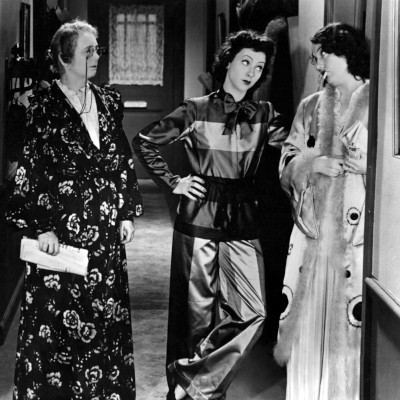
For a few precious years, a decidedly light-hearted, sensual and frivolous spirit swept through German movie theatres. The musical comedies of the late Weimar Republic, produced in a short period between the coming of sound and before the Nazi takeover are some of the hidden gems of that era, presented at this year’s festival. Rooted in the operetta tradition of the 19th century but adapted to contemporary aesthetics and mores, these films introduced popular comedians and singers to the movie audience, while celebrating the urbane, sophisticated and hedonistic modernity of the Weimar Republic’s cultural scene. The selection covers a wide variety of comedic and musical styles and especially focuses on the rich contributions of Jewish directors, screenwriters, producers, composers, and actors in the genre, almost all of whom were forbidden to work in Germany after 1933. Indeed, the genre can be described as a glimpse into an alternative pathway in film history, a window into a lost world.
Curated by Lukas Foerster

THE LAST LAUGH: GERMAN MUSICAL COMEDIES, 1930-32

PETER LORRE: STRANGER IN A STRANGE LAND

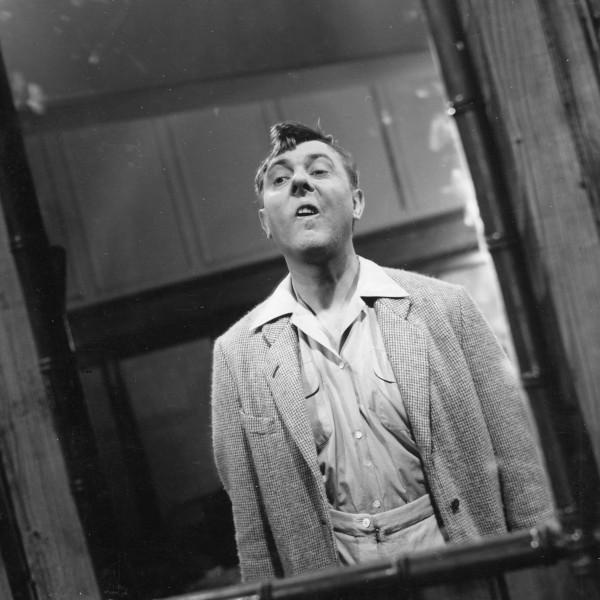
His voice summons angels and demons, his body and face are those of a child heavy with guilt. Referred to as “the greatest living actor” by Charles Chaplin in the 1930s and an inspiration for literary giants from Brecht to Graham Greene to Elfriede Jelinek, Peter Lorre is also The Lost One – a title he chose for his only directorial work. All in all, Lorre’s life, his films, his unrealized dreams and his physical presence constitute one of the most honest representations of 20th century man. Instead of wholeness and triumph, there is the half-full, half-empty result of traversing through Central European modernism and fascism, addiction and exile, the culture of money and fame, the mirror cabinet of faces and masks. From improvisational theatre in Vienna to the dissolution of the classical studio system. “Haunted by his early success in Fritz Lang’s M (1931) he died a Hollywood caricature at age 59” – that standard one-liner about Peter Lorre is not entirely false, but it misses 90 percent of what this series hopes to evoke.
Curated by Alexander Horwath

PETER LORRE: STRANGER IN A STRANGE LAND

ONE HUNDRED YEARS AGO: 1922

If looking for masterpieces, this year there’ll be films by luminous figures such as Dreyer, Flaherty, Nazimova, Vertov, Delluc, Murnau, Dwan, and Stroheim. But if you want to go beyond the canon, there’ll be works of Zhang Shichuan, Teuvo Puro and Warren A. Newcombe and by a choice selection of short films, among them two newly restored silhouette films by animation pioneer Lotte Reiniger. A special celebration is due to Albert Samama Chikli and his daughter Haydée Tamzali who a hundred years ago made together Zohra, the first Tunisian fiction film.
Curated by Mariann Lewinsky and Karl Wratschko

ONE HUNDRED YEARS AGO: 1922

KENJI MISUMI: AN INSTINCTIVE AUTEUR

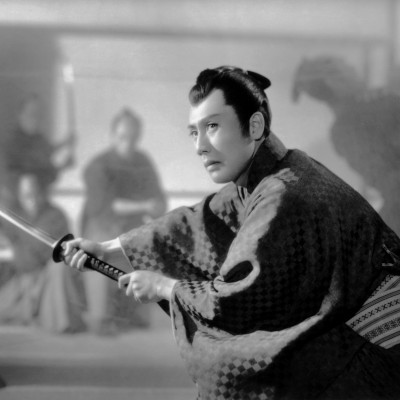
Kenji Misumi (1921-75), whose centenary was celebrated last year, is one of the unsung masters of the Japanese period film. Nicknamed ‘Little Mizoguchi’, he worked at Daiei for the bulk of his career, crafting films of stylistic brilliance and unforced moral gravity in the 1960s. He was a specialist above all in chambara (the action-packed variety of period film), which he imbued with remarkable Freudian undercurrents and imaginative widescreen imagery; but he also created convincing films focused on modern martial arts and on the romantic experiences of women. Mentored by Teinosuke Kinugasa, he shared his taste for expressionist imagery, but developed a style all his own. The centrepiece of the retrospective will be the so-called ‘sword trilogy’, recently restored in 4K by Kadokawa, which comprises some of Misumi’s outstanding visual and thematic achievements.
Curated by Alexander Jacoby and Johan Nordström

KENJI MISUMI: AN INSTINCTIVE AUTEUR

THE CENTURY OF CINEMA: 1902

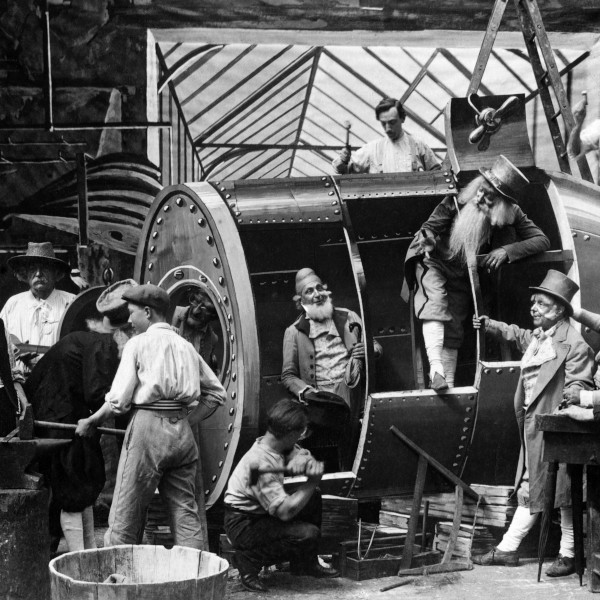
A crucial year for travelling back in time, as one of the brightest stars in the universe of early cinema appeared in it under the mundane-sounding number “Star Film 399-411”, that is Georges Méliès’ A Trip to the Moon. This, as well as his fantastic trick films and gorgeous fairy tale films and the imitations by Gaston Velle (chez Lumière brothers) and Ferdinand Zecca (chez Pathé) are some of the highlights in the programme. The great variety of genres already on offer by Pathé frères is another remarkable aspect of that year’s production, preannouncing the dramatic expansion and worldwide success of cinematography in the years to come.
Curated by Mariann Lewinsky and Karl Wratschko

THE CENTURY OF CINEMA: 1902

Ritrovati e restaurati

This year’s Recovered and Restored selection includes great masters like Renoir, Visconti, Buñuel, Bertolucci, Pasolini, Stevens, Sirk, von Stroheim and Murnau alongside less famous but no less astonishing filmmakers: Kira Muratova, whose early Brief Encounters (a sort of musical on the troubles of a young supervisor in the Soviet Communist Party) will screen together with The Long Farewell; Tuija-Maija Niskanen, with her portrait of a woman, Avskedet; Vojteˇch Jasný, whose Až prˇijde kocour was made in complete freedom with a cat as a protagonist! Although less celebrated as a director than as an actor, in Buck and the Preacher, Sidney Poitier provides us with an astounding western in which Afro-Americans join forces with the Indians against the (white) bad guys. And there will also be Argento, Lynch, Waters, Russell: just a few of the names included in a special ‘pop programme’ we have in store for our audience.
Curated by Gian Luca Farinelli

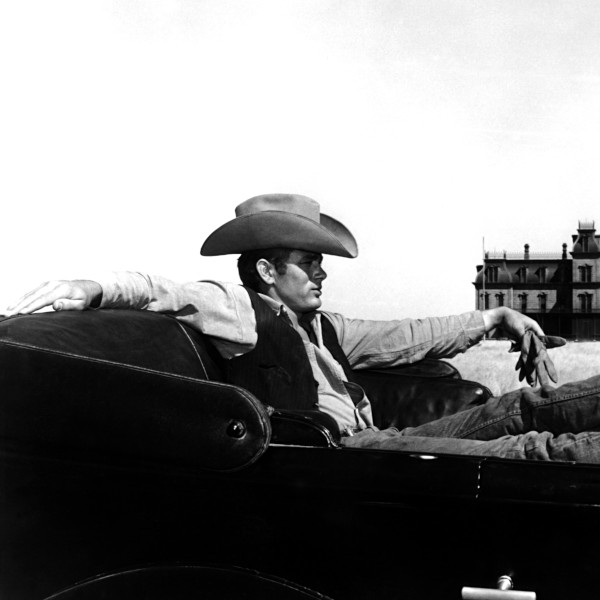
Le Voyage dans la lune (1902) di Georges Méliès • Les Misérables (1912) di Albert Capellani • Blind Husbands (Mariti ciechi, 1919) di Erich von Stroheim • Crazy to Marry (1921) di James Cruze • Béhula (1921) di Camille Legrand • La Terre (The Earth, 1921) di André Antoine • Tu m’appartiens! (Tu m’appartieni!, 1929) di Maurice Gleize • La Règle du jeu (La regola del gioco / The Rules of the Game, 1939) di Jean Renoir • All That Money Can Buy (L’oro del demonio, 1941) di William Dieterle • Sciuscià (Shoeshine, 1946) di Vittorio De Sica • Caught (Presi nella morsa, 1949) di Max Ophüls • Singin’ in the Rain (Cantando sotto la pioggia, 1952) di Stanley Donen, Gene Kelly • Invaders from Mars (Gli invasori spaziali, 1953) di William Cameron Menzies • Él (Lui, 1953) di Luis Buñuel • Giant (Il gigante, 1956) di George Stevens • Written on the Wind (Come le foglie al vento, 1956) di Douglas Sirk • La ricotta – Ep. di Ro.Go.Pa.G. (1963) di Pier Paolo Pasolini • Až prˇijde kocour (The Cassandra Cat, 1963) di Vojteˇch Jasný • Topkapi (1964) di Jules Dassin • Le Samouraï (Frank Costello faccia d’angelo, 1967) di Jean-Pierre Melville • Korotkie vstrechi (Brevi incontri / Brief Encounters, 1967) di Kira Muratova • Il conformista (The Conformist, 1970) di Bernardo Bertolucci • Dolgie provody (Lunghi addii / The Long Farewell, 1971) di Kira Muratova • Doroshkechi (The Carriage Driver, 1971) di Nosratollah Karimi • The Last Picture Show (L’ultimo spettacolo, 1971) di Peter Bogdanovich • Cheshmeh (The Spring, 1972) di Arby Ovanessian • Buck and the Preacher (Non predicare, spara, 1972) di Sidney Poitier • La Maman et la putain (The Mother and the Whore, 1973) di Jean Eustache • Ludwig (1973) di Luchino Visconti • Picnic at Hanging Rock (1975) di Peter Weir • Tommy (1975) di Ken Russell • The Driver (Driver, l’imprendibile, 1978) di Walter Hill • The Blues Brothers (1980) di John Landis • Avskedet (The Farewell, 1982) di Tuija-Maija Niskanen • Tenebre (1982) di Dario Argento • Nostalghia (1983) di Andrej Tarkovskij • Videodrome (1983) di David Cronenberg • Trading Places (Una poltrona per due, 1983) di John Landis • Carmen (1984) di Francesco Rosi • Twin Peaks: Fire Walk With Me (Fuoco cammina con me, 1992) di David Lynch


Ritrovati e restaurati